Poovar
What Is Poovar Boating? The Complete First-Timer's Guide (2026)
Poovar boating is a guided boat journey through one of Kerala's most distinctive coastal landscapes, a route that moves from a river estuary through mangrove forest and a historic backwater canal, past a sandy island, and out to the point where the river, the backwaters, and the Arabian Sea all meet.
On this page
Poovar boating is a guided boat journey through one of Kerala's most distinctive coastal landscapes, a route that moves from a river estuary through mangrove forest and a historic backwater canal, past a sandy island, and out to the point where the river, the backwaters, and the Arabian Sea all meet. It's one of the main ways travellers experience Poovar's backwaters, and for most first-timers, it's the single activity that defines the visit.
This guide covers what Poovar boating actually involves, how the route works, what you'll see along the way, the boat types available, and how to prepare.
What Is Poovar Boating?
Poovar boating is a boat journey that starts at the Neyyar River estuary and travels through mangrove forest, a backwater canal, and open lagoon before reaching Poovar Island and the point where the river meets the sea. It's not simply a way to get from one place to another, the route itself is the experience.
The boat moves through several distinct environments in a single trip: narrow mangrove-lined channels, a historic inland waterway, open backwater stretches, and a narrow sand island separating calm backwater from the open Arabian Sea. Few boat rides in Kerala pack this much geographic variety into one route, which is what sets a Poovar boat ride apart from a standard backwater cruise.
Explore Islands, Mangroves & Beaches
Poovar Boating Cruises Starting at Just ₹1,199/-
Book Poovar backwater cruises online at transparent rates and enjoy a hassle-free experience with Cruoo.
Check AvailabilityHow Does Poovar Boating Work?
1. Reach the boating point
The journey begins at the Poovar boating jetty on the Neyyar River. Getting there is straightforward from Trivandrum or Kovalam, see the section on how to get to Poovar below for details.
2. Choose your boat and route
Boats vary by type and duration, and the exact route can differ slightly depending on which one you pick. A shorter ride covers the core stretch; a longer ride extends further toward the estuary point and golden sand beach.
3. Start through the backwaters
The boat departs the jetty and enters the Neyyar River's backwater stretch, moving from open water into narrower channels.
4. Explore the mangrove channels
The route passes through dense mangrove forest and a mangrove island, where the channels narrow and the canopy closes in overhead.
5. Continue toward Poovar Island
From the mangroves, the boat moves through the AVM Canal and open backwater lagoon before approaching Poovar Island and the estuary point, where the river meets the sea.
6. Return to the starting point
After reaching the island and the golden sand beach, the boat retraces the route back to the jetty.
What Is the Poovar Boating Route?
The Poovar boating route follows this sequence:
- Neyyar River
- Mangrove Forest
- Mangrove Island
- Poovar Island
- Mother Mary Statue
- Coconut Island
- AVM Canal
- Floating Restaurant (optional stop)
- Floating Cottages (visible from the boat)
- Estuary Point
- Golden Sand Beach
The exact stops and pacing can vary depending on:
- Boat type - motor boat or Shikara
- Duration - a 1-hour ride covers less ground than a 2-hour ride
- Operator - routing can differ slightly between operators
- Weather and water conditions - tides and monsoon flow can affect which channels are used
What Will You See on a Poovar Boat Ride?
Neyyar River
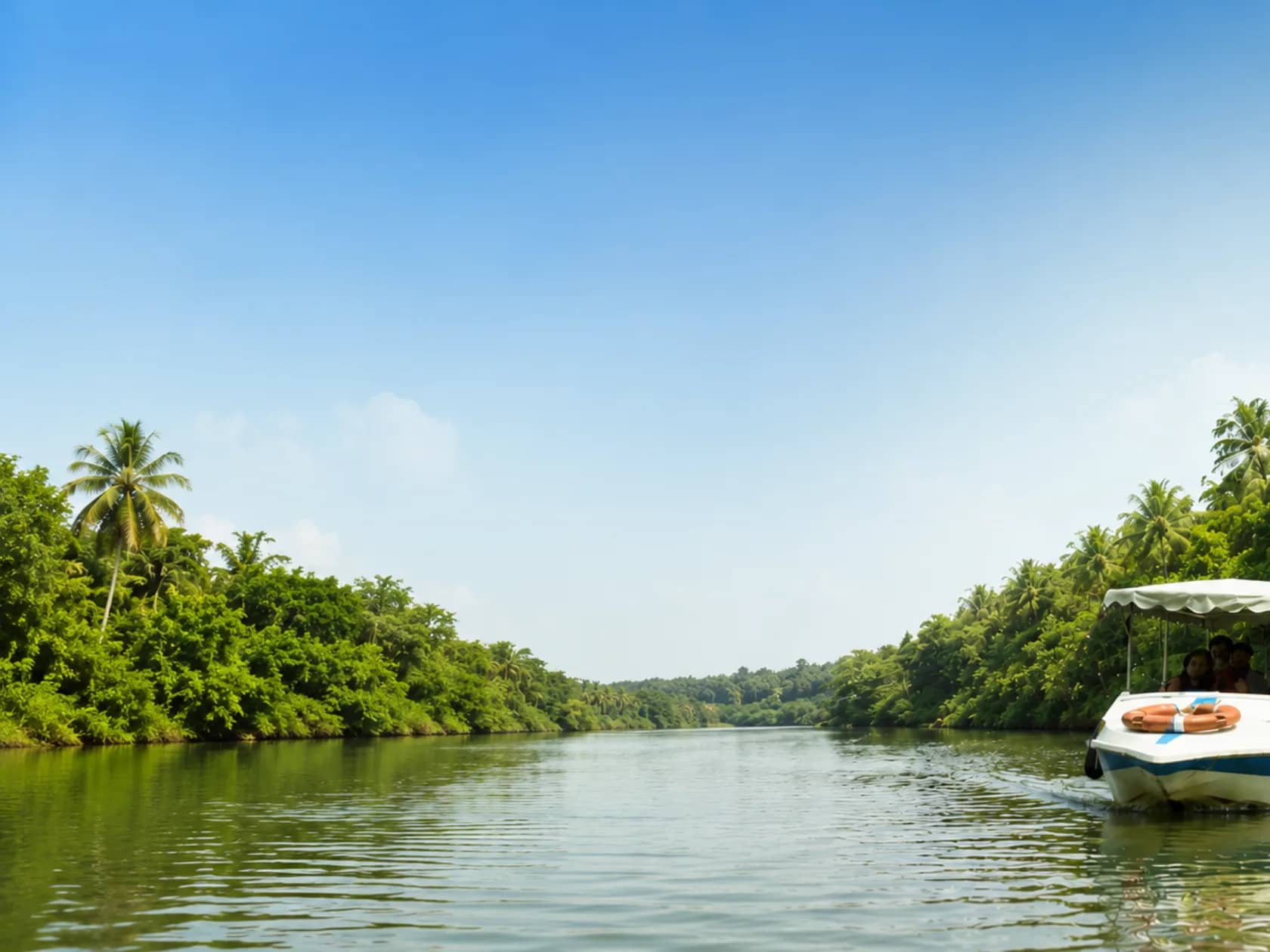
The journey begins on the Neyyar River, where the boat moves through calm waters surrounded by coconut palms, riverside vegetation, and local waterways. This opening stretch offers a peaceful introduction to the Poovar backwater landscape before the route narrows into the mangrove-covered channels.
Mangrove Forest
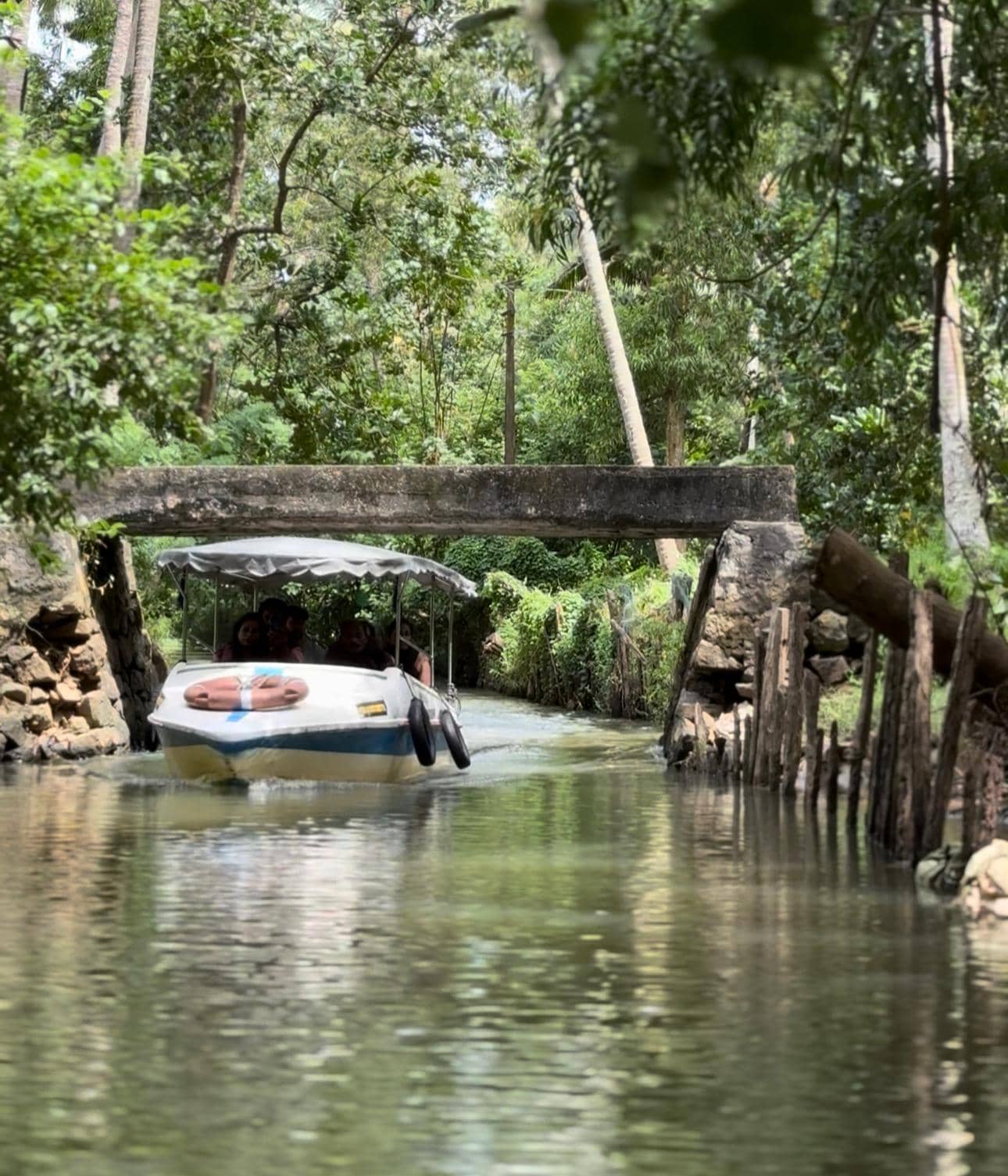
The river gradually gives way to narrow waterways bordered by dense mangrove vegetation. The enclosed channels create a quieter, more shaded section of the journey, with mangrove roots along the water and birds often visible around the edges. It is one of the most scenic stretches of the route for photography and nature watching.
Mangrove Island
Further along, the boat passes a small mangrove island surrounded by the backwaters. The island adds another layer to the natural landscape, with dense vegetation rising directly from the water. Depending on the time of day, this section can be especially peaceful as the boat moves through the quieter mangrove surroundings.
Poovar Island
The route continues toward Poovar Island, a narrow sandy stretch separated from the mainland by the backwaters. From the boat, you can see the island's vegetation and sandy shoreline as the route follows the waterways around this distinctive part of Poovar.
Mother Mary Statue
As the boat continues, you'll pass the Mother Mary statue near the water. The statue is modelled on Michelangelo's Pietà and has become a recognizable landmark along the Poovar boating route. It is a notable point to look out for as the journey continues toward the wider backwaters.
Coconut Island
The boat then passes Coconut Island, surrounded by the backwater landscape and lined with coconut palms. This section gives you a closer view of the tropical character of Poovar, with the waterways opening up as the journey moves toward the canal.
AVM Canal
From Coconut Island, the route connects with the AVM Canal, short for the Anantha-Victoria-Marthandam Canal. The historic canal forms part of the wider waterway network connecting the southern Kerala and Tamil Nadu region. Today, this stretch provides a transition between the narrower natural channels and the broader Poovar backwaters.
Floating Restaurant (Optional Stop)
Along the route, you'll also pass a floating restaurant located on the backwaters. It can be seen from the boat and may be added as a stop if requested at the time of booking. The stop is optional and is not included in the standard Cruoo boating package.
Floating Cottages (Visible From the Boat)
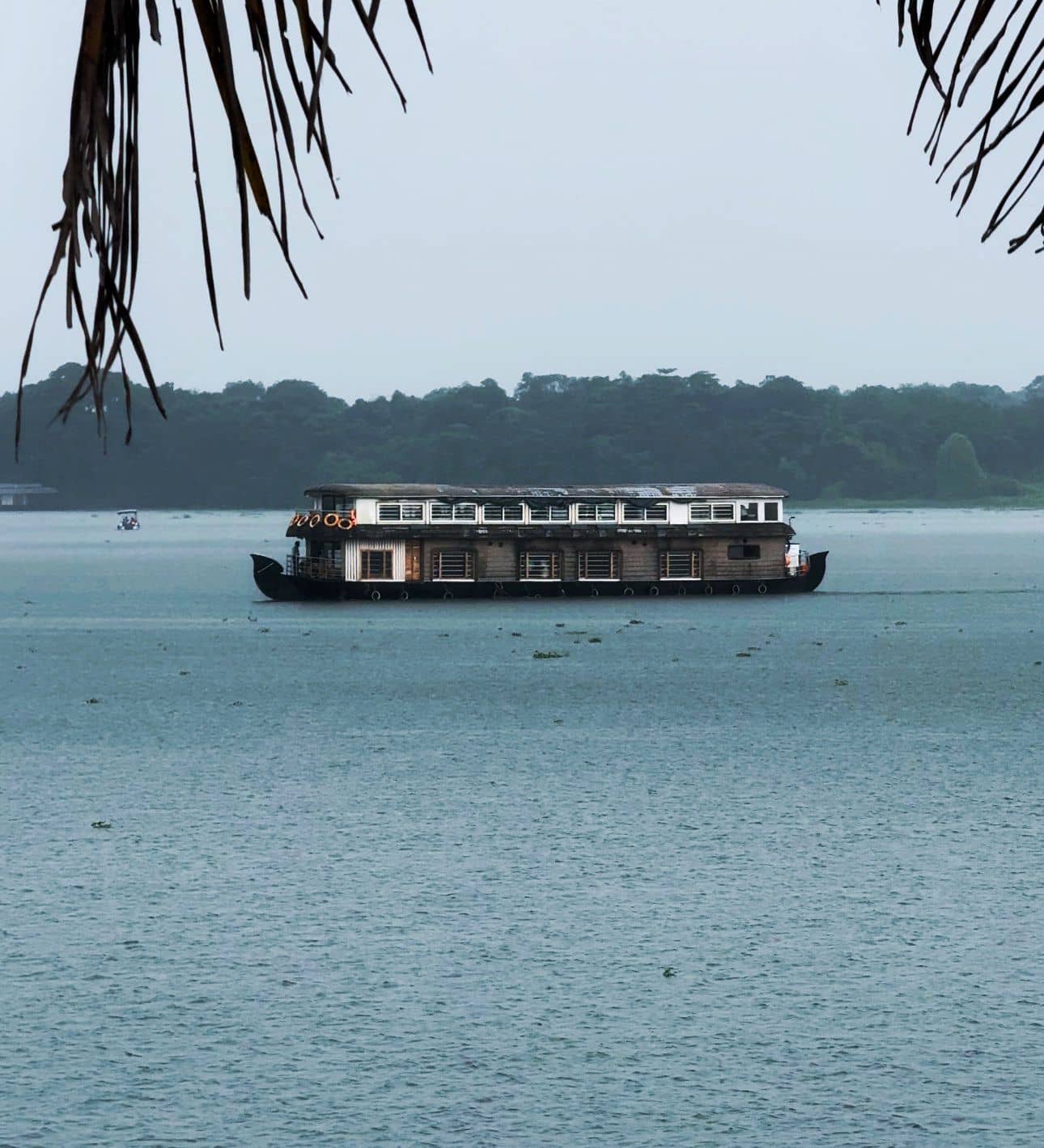
The route also passes floating cottages positioned along the backwaters. These privately operated properties are visible from the boat and form part of the distinctive scenery of the Poovar lagoon. They are viewed from the water and are not included as an accessible stop on the standard boating route.
Estuary Point
The journey eventually reaches the estuary point, where the Neyyar River, Poovar's backwater lagoon, and the Arabian Sea come together. This meeting of different waterways is one of the defining features of Poovar and is the main highlight of the boating route.
Golden Sand Beach
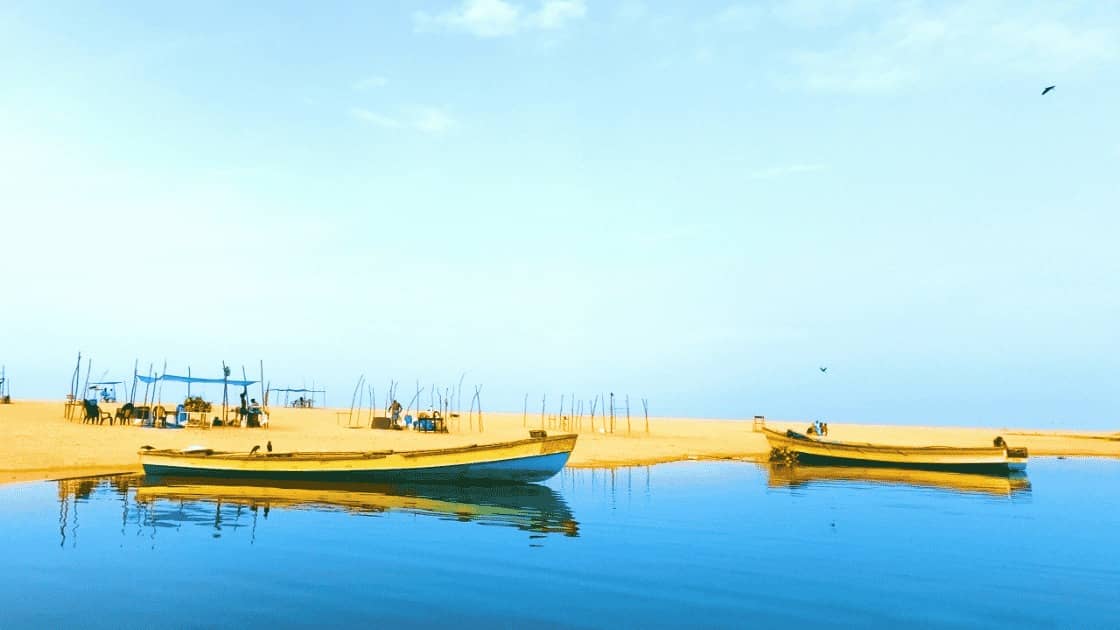
Beyond the estuary is Poovar's Golden Sand Beach, a narrow sandy coastline separating the backwaters from the Arabian Sea. The contrast between the golden sand, open sea, and calm backwaters makes this the natural finishing point of the journey and one of the most memorable views on a Poovar boat ride.
Types of Poovar Boating Experiences
Cruoo offers two boat types for Poovar boating:
Motor Boat
Faster than a Shikara, the motor boat covers the full route in less time and works well for first-time visitors who want to see the whole journey without a long time commitment.
Shikara (Country Boat)
A slower, more traditional wooden boat. It moves quietly through the mangrove channels and backwaters, better suited to travellers who want a relaxed, sightseeing-paced ride rather than covering ground quickly.
What Is a Poovar Boat Ride Like?
You board at the jetty and leave the open river behind almost immediately, entering the narrow, shaded mangrove channels first. The pace slows here, this is the part of the ride where birdlife is most visible and the water is calmest.
As the channels widen into the AVM Canal and the backwater lagoon, the scenery opens up. You'll pass Coconut Island, catch sight of the floating restaurant and cottages, and start approaching Poovar Island itself.
Near the estuary point, the Mother Mary statue and Elephant Rock come into view, and then the moment most first-timers remember - the boat reaches the point where the calm backwater gives way to the open, audible Arabian Sea.
The golden sand beach sits right at this junction, with the sea on one side and calm backwater on the other. The return trip retraces the same route back to the jetty, at a similar pace to the outbound leg.
How Long Does Poovar Boating Take?
Poovar boating typically runs from 1 hour to 2 hours, depending on the boat and route you choose. A 1-hour ride covers the core mangrove-to-backwater stretch; a 2-hour ride extends further, giving more time at the island and estuary point rather than rushing the return leg.
When Is the Best Time for Poovar Boating?
Best Season
Poovar boating runs year-round, but conditions are best when the water is calm and clear, generally outside the heaviest monsoon months. Weather and water levels can affect which channels are navigable on a given day.
Best Time of Day
Mornings tend to be calmer and cooler, with better visibility for birdwatching in the mangrove stretch. Midday brings stronger sun, particularly on the open backwater and estuary sections. Late afternoon offers softer light, especially around the estuary point.
See Poovar Boating Timings for a detailed schedule.
Poovar Boating Tips for First-Timers
Confirm the Route
Make sure you know whether your trip includes Poovar Island and the estuary point, not just the mangrove and backwater stretch.
Confirm the Duration
A 1-hour and a 2-hour trip cover the same route but the speed of the boat can affect your experience of bird watching, beach time and other activities.
Check What Is Included
Confirm the boat type, duration, number of passengers covered, and any additional charges before booking.
Carry Sun Protection
Sunscreen, a hat, and sunglasses matter, especially once the boat moves into the open backwater and estuary sections.
Protect Your Phone
Use a waterproof pouch or case for phones and other valuables, particularly near the estuary point and beach.
Follow Safety Instructions
Wear your life jacket for the full ride and follow your operator's instructions, especially around the estuary point where backwater meets open sea.
What Should You Wear for Poovar Boating?
- Light, comfortable clothing suited to heat and humidity
- Comfortable footwear you don't mind getting wet or sandy
- Sun protection - hat, sunglasses, sunscreen
- Avoid loose accessories that could fall into the water
- Waterproof protection for phones and electronics
- A spare set of clothes if you plan to get in the water at the beach
Explore Trivandrum, Beyond the Beach
Discover More Things to Do in Trivandrum
From Poovar boating to beaches, surfing and local experiences, discover more of Trivandrum with Cruoo.
Explore More ExperiencesIs Poovar Boating Suitable for Families?
Yes. The backwater stretch is calm and sheltered, and life jackets are mandatory for all passengers, including children. Before booking, parents should confirm the boat's passenger capacity, check current weather conditions, and ask whether the route includes any stretch closer to open water at the estuary point, so they know what to expect once the boat nears the beach.
How Much Does Poovar Boating Cost?
Poovar boating prices vary depending on the boat type, duration, number of people, and how you book. On Cruoo, prices start at ₹1,199 for a 1-hour motor boat ride (2 persons), rising to ₹1,999 for 2 hours, with an extra ₹99 per additional person.
For a full price comparison and per-person breakdown, see our Poovar Boating Price Guide.
How Do You Book Poovar Boating?
You generally have three options:
- Walk-in - book directly with an operator at the jetty
- Call ahead - contact an operator by phone in advance
- Online booking - book through Cruoo with the route, duration, and price confirmed before you arrive
For the complete step-by-step process, see How to Book Poovar Island Boating Online.
How Do You Get to Poovar?
Poovar is reachable by taxi, auto-rickshaw, or bus from both Trivandrum and Kovalam, with taxi being the fastest option and bus the most economical.
- From Trivandrum - roughly 45-60 minutes by road
- From Kovalam - a shorter drive along the coast around 20-30 minutes.
- By public transport - KSRTC buses run to Poovar Bus Stand
See How to Reach Poovar - guide for full details.
Poovar Boating First-Timer Checklist
- Confirm boat type (motor boat or Shikara)
- Confirm duration (1 hour or 2 hours)
- Confirm the route
- Confirm whether Poovar Island and the estuary point are included
- Confirm total passenger count
- Check the meeting point/jetty location
- Carry sunscreen
- Protect valuables in a waterproof pouch
- Wear comfortable, water-friendly clothes
- Follow all safety instructions, including wearing your life jacket
FAQ
What is Poovar boating?
What can you see on a Poovar boat ride?
How does Poovar boating work?
What is the Poovar boating route?
How long does a Poovar boat ride take?
Is Poovar boating suitable for first-time visitors?
Is Poovar boating suitable for families?
What should I take for a Poovar boat ride?

Written by
Sherin Stephen · Trivandrum
Born and raised in Trivandrum. Loves to travel — long weekends, short trips, the occasional unplanned detour. Shares the odd note here when something is worth passing on.
Explore Islands, Mangroves & Beaches
Poovar Boating Cruises Starting at Just ₹1,199/-
Book Poovar backwater cruises online at transparent rates and enjoy a hassle-free experience with Cruoo.
Check Availability