Varkala
Varkala Travel Guide for First-Time Visitors: Everything You Need to Know
Twenty years of watching Varkala change, distilled into one honest guide: the cliff, the pilgrimage beach, the surf, the Ayurveda and everything first-time visitors get wrong before they book.
On this page
I have watched Varkala change over twenty years. I have seen it go from a quiet pilgrimage town with a handful of guesthouses to a destination that draws travellers from Germany, Israel, France, and every major Indian city. Some of those travellers leave saying it changed their lives. Others leave saying it was overrated and overcrowded. The difference almost always comes down to whether they knew what they were walking into.
This guide is my attempt to give you that knowledge before you arrive. It is written from the ground, not from a press trip or an aggregator. I am a local guide based in Thiruvananthapuram district, and Varkala is, in many ways, my backyard.
This guide is for: First-time visitors to Varkala who want an honest, complete picture before they book anything.
What Is Varkala? A Quick Answer for First-Time Visitors
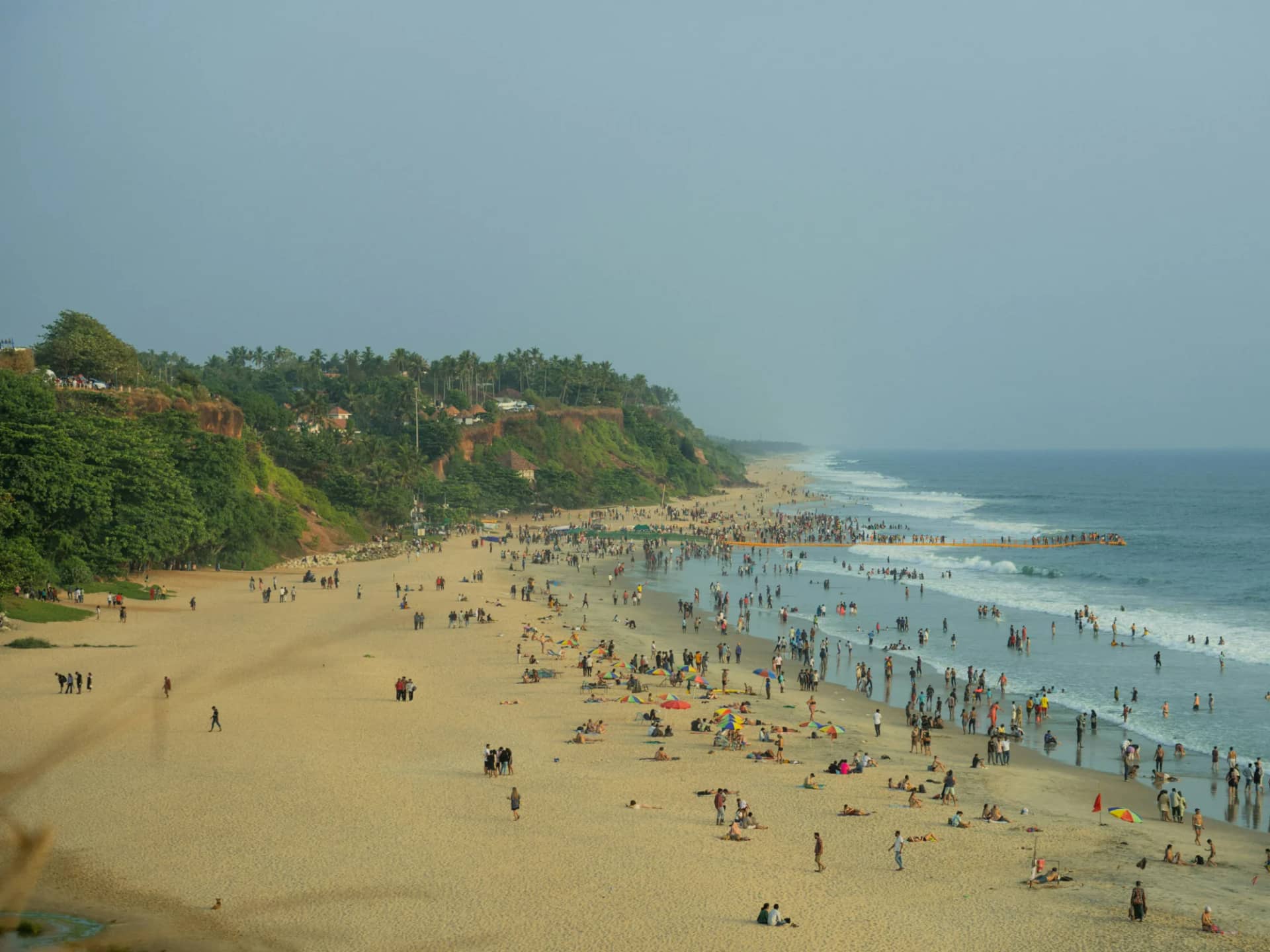
Varkala is a coastal town in Thiruvananthapuram district, Kerala, situated on the Arabian Sea about 51 kilometres north of Trivandrum city. It is known for three things that no other Kerala beach destination combines in the same way: a dramatic laterite cliff that runs above the beach, a significant Hindu pilgrimage beach called Papanasam, and a long-established wellness and yoga culture.
The cliff path that sits on top of the 15-metre red rock formation is lined with cafes, guesthouses, surf schools, Ayurveda centres, and souvenir shops. The beach below is accessible by staircases cut into the cliff face. The combination of cliff views, beach access, spiritual significance, and bohemian cafe culture is what makes Varkala genuinely different from every other beach town in Kerala.
Where Is Varkala Located?
Varkala is located in Thiruvananthapuram district in the southern tip of Kerala, India. It sits on the western coast of India, facing the Arabian Sea. The nearest city is Thiruvananthapuram (also called Trivandrum), which is approximately 51 kilometres south.
Travellers arriving at Trivandrum International Airport can reach Varkala in about 45 minutes by road or train. Varkala has its own railway station called Varkala Sivagiri (station code: VAK), which sits on the Thiruvananthapuram to Kollam line and receives frequent trains from both cities.
Which District Is Varkala In?
Varkala is in Thiruvananthapuram district, the southernmost district of Kerala. This is important to know when searching for the train station, local government services, or when asking for directions. The town itself is sometimes referred to as Varkala Town, while the cliff area and beach are about 3 kilometres from the town centre.
Which Sea Is Varkala On?
Varkala Beach faces the Arabian Sea. This is the same sea that Kovalam, Goa, and Mumbai's beaches face. At this latitude, the Arabian Sea produces consistent swells that make Varkala one of the better beginner surf spots in Kerala, particularly between September and March.
What Is Varkala Famous For?
Varkala is famous for its cliff, its pilgrimage beach, its surf, and its Ayurveda. Let me be specific about each.
The cliff is the defining physical feature. It is a laterite rock formation approximately 15 metres high that runs parallel to the beach for about 2 kilometres. On top of it sit cafes, yoga studios, Ayurveda centres, guesthouses, and clothing shops. Below it is the beach.
The view from the cliff edge, looking out over the Arabian Sea, is the image that most people associate with Varkala. It is genuinely striking, especially in the hour before sunset when the red rock catches the light and the sea turns dark blue beneath it.
Papanasam Beach is the stretch of beach directly below the North Cliff. The name means "destroyer of sins" in Sanskrit. It is a sacred bathing beach for Hindus, and the Janardhana Swamy Temple, which sits close to the cliff base and dates back over 2,000 years, is the spiritual anchor of the whole town.
On days of religious significance, including Ashtami Rohini and the anniversary of a death in the family, Hindu pilgrims come here from across Kerala to perform rituals for their ancestors.
The pilgrimage activity coexists with the tourist activity in a way that is sometimes awkward, but mostly real. If you walk down to the beach at 6am, you will see both pilgrims in white clothes performing rituals at the water's edge and foreign travellers in board shorts heading for a swim.
Surfing is something Varkala has built a genuine reputation for among beginners. The waves here are not powerful enough for experienced surfers, but they are consistent and forgiving. Surf schools operate on the beach, and a 1.5-hour beginner lesson typically costs between Rs 1,500 and Rs 2,500 depending on the season and the operator.
Many visitors who have never surfed before catch their first wave here. Surfing is generally closed or restricted during peak monsoon (June to August) when the waves become too rough and unpredictable.
Ayurveda and yoga are available throughout the cliff area, from the established ashrams to small walk-in centres. The Sivananda Yoga Vedanta Dhanwantari Ashram, located near Thiruvananthapuram (about 45 minutes from Varkala), is one of the most respected yoga institutions in South India and draws visitors who combine a stay there with time at Varkala.
The cliff area itself has dozens of Ayurveda centres ranging from qualified practitioners to tourist-facing massage parlours. The quality difference is significant. I cover this properly in the Ayurveda section below.
The Varkala Cliff: What It Actually Looks and Feels Like
I want to describe the cliff experience the way a first-time visitor will actually encounter it, not the way a brochure does.
You arrive at the top of the cliff, probably by auto-rickshaw from Varkala railway station (around Rs 120 to Rs 150 for the 3-kilometre ride). The path along the cliff edge is not a wide promenade. It is a narrow lane with cafes and shops on one side and a waist-high wall on the other, beyond which is a 15-metre drop to the beach below.
The path runs roughly from the helipad viewpoint in the north to a steeper set of steps at the south end. Walking the full length takes about 20 minutes at a slow pace.
The cafes that line the path serve a mix of Kerala food, Israeli food, pizza, momos, and smoothie bowls. Prices are higher than what you would pay inland. A meal at a cliff cafe typically costs Rs 300 to Rs 600 per person.
The food quality varies considerably. Cafe Darjeeling is known for pastries. God's Own Country Kitchen gets consistent praise for actual food quality rather than just views. Sarwa Cafe has arguably the best view on the cliff; the food there is secondary.
In the evenings, from about 5:30pm onward, the cliff fills up. Families, couples, solo travellers, and pilgrims all converge for the sunset. The sun drops into the Arabian Sea directly in front of you.
On clear days between October and March, this is genuinely one of the best sunsets I have seen anywhere on the Kerala coast. The cliff is west-facing, the elevation is exactly right, and there are no buildings obstructing the view.
Which Beach Is Best in Varkala?
Varkala has three main beaches, and the right answer depends on what you want.
Papanasam Beach (North Cliff beach) is the main one. It has the most access, the most activity, and the surf school presence. It is the beach below the tourist cliff. Swimming is generally safe in the marked zones, but currents can be strong. Always swim within the flagged areas where lifeguards are present.
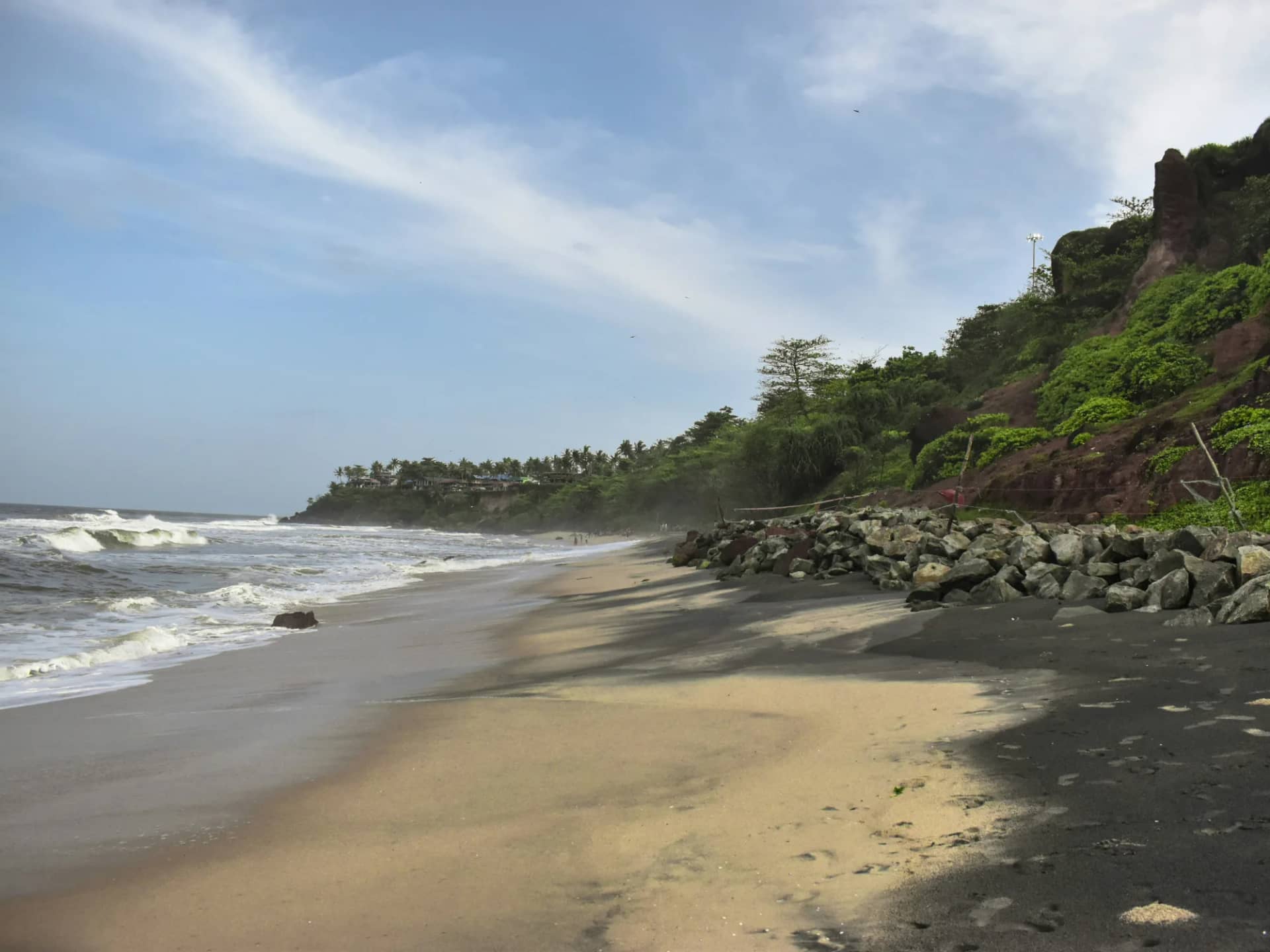
Black Beach (also called Odayam Beach) is about 2 kilometres north of the cliff. It gets its name from the dark volcanic sand. There is no commercial development here. The waves are strong and it is not suitable for casual swimming, but for photography and atmosphere it is one of the more dramatic stretches of coastline in the area. Many photographers prefer it at dawn.
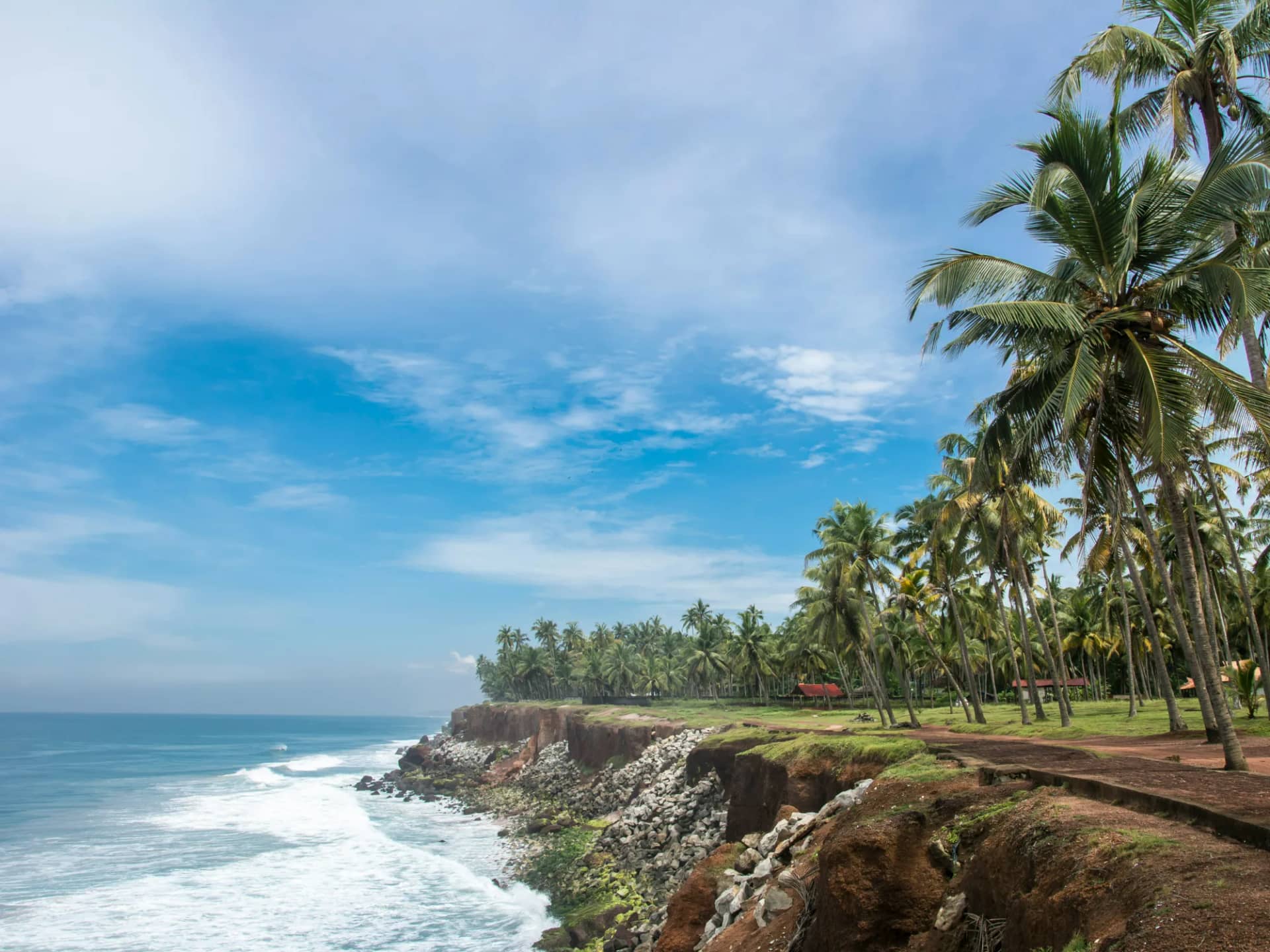
Kappil Beach sits further north, about 8 kilometres from the cliff, where a backwater lake meets the sea. Renting a scooter and riding up to Kappil along the coastal road is one of the most enjoyable things you can do in Varkala. The road passes through coconut groves and gives you sea views that the cliff itself does not offer. The beach at Kappil is calm, clean, and rarely crowded.
Is Varkala Worth Visiting?
Yes, but the honest answer needs some conditions attached.
Varkala is worth visiting if you are looking for a beach destination that offers more than just sand and sea. The cliff culture, the spiritual dimension of Papanasam, the surf, the Ayurveda access, and the community energy at the hostels and cafes all add up to an experience that is genuinely layered.
Compared to Kovalam, which is more resort-oriented and family-focused, Varkala has more character. Compared to Goa, it is quieter, less commercial at the nightlife level, and more connected to actual Kerala culture.
Varkala is not worth visiting if you are coming for nightlife. There is none in the Goa sense. Most cafes on the cliff close by 10pm or 11pm. Sandy Bay is mentioned as the one place open later, but it is a single bar. The town shuts down early.
It is also worth being honest about the crowd situation. Varkala became significantly more popular after social media coverage picked up around 2022 to 2023. Weekend crowds between December and March are intense. If you are visiting for peace and quiet, avoid long weekends, avoid March and April when domestic tourism peaks, and consider arriving on a Tuesday or Wednesday when the place breathes again.
The litter situation is a real issue. Plastic bottles, food packaging, and general tourist waste have accumulated in parts of the cliff path and on the beach. This is not unique to Varkala, but it is more visible than in some comparable destinations. Carry your own bag and do not add to it.
Why International Tourists Love Varkala
International travellers return to Varkala year after year for reasons that go beyond the physical setting. The combination of affordable Ayurveda, beginner surf, strong hostel community culture, yoga access, and a beach that carries genuine spiritual weight creates something that beach destinations in Goa or Thailand rarely offer.
Foreign visitors consistently describe Varkala as a place where it is easy to slow down, meet other travellers naturally at cafes and sunset walks, and structure days around wellness rather than itinerary-ticking.
The presence of the Janardhana Swamy Temple and the pilgrimage culture gives the place an authenticity that purely tourist-built destinations lack. For many first-time visitors to India, Varkala serves as a gentle entry point into Kerala's culture without being overwhelming.
Varkala Ayurveda and Yoga: The Honest Picture
The Ayurveda scene in Varkala runs from genuinely good to actively misleading, and the distance between the two is not always obvious from the outside.
The cliff is lined with walk-in centres offering oil massages for Rs 800 to Rs 1,500 per hour. Some of these have trained therapists and use proper Ayurvedic oils. Many do not. The tell is the consultation: a legitimate Ayurveda session begins with a doctor or practitioner asking about your health history, your digestion, your sleep, and your constitution before deciding which oils and techniques to use.
If someone walks you straight to a massage table without a conversation, you are paying for a spa treatment, not Ayurveda. That is fine if it is what you want, but know what you are buying.
For genuine Ayurveda, the better options in the Varkala area include Absolute Ayurveda, which has been operating on the cliff for several years and gets consistent reviews for qualified practitioners. Nila Ayurveda and Yoga Wellness is another frequently recommended name. For longer programmes of 7 days or more, the better-regarded centres are often slightly away from the main cliff strip, where the tourist foot traffic pressure is lower.
Yoga on the cliff is more accessible. Several studios offer drop-in classes at Rs 300 to Rs 600 per session. The Sivananda tradition is well-represented in the broader Thiruvananthapuram area. If yoga is a primary reason for your visit, a morning class followed by a sunset walk and a quiet dinner is a rhythm that Varkala handles very well.
Varkala for Different Types of Travellers
Solo Travellers
Varkala is one of the better solo travel destinations in South India, but it requires some navigation. The hostel scene is centred on North Cliff, and the community at places like Zostel Varkala, Mellow Hostel, and Molly's Hostel is genuinely social. These are places where you meet people at breakfast and end up spending the day with them.
For solo female travellers specifically: stay on or near the North Cliff, choose women-run or women-recommended hostels (Mellow and Molly's are both cited frequently as safer options), avoid isolated beaches after dark, and read the low-rated reviews of any accommodation before booking, not just the average score.
The harassment situation in Varkala is real and documented. Certain groups of men treat the tourist area as a space with looser social norms than they experience elsewhere. This is not a reason to avoid Varkala, but it is a reason to stay in the well-lit, well-populated sections of the cliff and to trust your instincts quickly if a situation feels wrong.
Couples
North Cliff is the better option for couples who want to be in the middle of everything. South Cliff is quieter, has fewer cafes, and suits couples who want more privacy and less foot traffic. For honeymooners or couples wanting a romantic setting, properties with cliff views and private access are available in both areas.
Families
Families are not the primary audience for Varkala and the place shows it. The cliff path is narrow and not particularly child-friendly. The beach is beautiful but requires a staircase descent that is manageable for most adults but awkward with young children or heavy bags. Papanasam Beach has a gentler slope than some Kerala beaches, which helps.
The South Cliff area is quieter and slightly more family-oriented in character. If you are travelling with children under 8, Kovalam's flatter, more resort-organised beach setup may be more practical.
Budget Travellers and Backpackers
Varkala is one of the more affordable beach destinations in Kerala if you stay in a dorm and eat at the right places. Dorm beds at reputable hostels run Rs 500 to Rs 900 per night. Meals at non-cliff-view restaurants cost Rs 150 to Rs 300.
The cliff cafes charge a premium for the view. Learn quickly that one lane back from the cliff edge, prices drop significantly. Scooter rental runs Rs 500 to Rs 700 per day and opens up Kappil Beach, Anchuthengu Fort, Edava Beach, and the mangrove kayaking area at Paravur without needing to pay for tours.
Activities Worth Doing in Varkala
Surfing is the most recommended active experience here. Book a lesson through a reputable school. Moana Surf School gets good mentions. A 1.5-hour session with board and instruction costs Rs 1,500 to Rs 2,500. Most beginners stand on their first or second session. Do not surf outside flagged zones.
Mangrove kayaking at Paravur is a half-day trip worth taking. The kayaking facility is about 20 minutes from Varkala by scooter or cab. The route goes through a mangrove forest and takes approximately 3 hours. Advance booking gives a Rs 200 discount and the morning slot (6am start) gives you calm water before the wind picks up.
Know before you go: the kayak can overturn in heavy current and the lifeguard covers a 350-metre radius, not the full route. If you cannot swim, wear your life jacket properly and do not go deep into the channels alone.
Janardhana Swamy Temple is one of the oldest temples in Kerala, with an estimated history of over 2,000 years. It is an active place of worship, not a tourist site with visiting hours. Dress modestly (cover shoulders and legs), remove footwear at the entrance, and be genuinely respectful of the rituals taking place.
The temple is located near the base of the cliff. Non-Hindus are generally permitted entry to the outer areas but should observe the conventions quietly.
Cliff walk at sunset is not an activity in the tour-package sense, but it is the defining Varkala experience. Start at the helipad viewpoint on the north end around 5pm. Walk south slowly. Stop at whichever cafe gives you the best sight line to the horizon. Stay until the light is fully gone. Do this on your first evening and you will understand immediately why people keep coming back.
Scooter ride to Kappil and Anchuthengu is the best day trip from Varkala that does not require a tour. Rent a scooter in the morning, ride north to Kappil Beach, then continue to Anchuthengu Fort (also called Anjengo Fort), which is a 17th-century Portuguese and British colonial fort with a lighthouse. The ride takes about 30 minutes each way and the coastal road is one of the more enjoyable drives in the district.
Is Two Days Enough to Explore Varkala?
Two full days is enough to see the main things in Varkala without rushing. Here is what two days realistically covers.
Day 1 gives you: an early morning walk on the cliff before the crowds arrive, a surf lesson or swim on Papanasam Beach, lunch at a cliff cafe, an Ayurveda session in the afternoon, and the sunset walk in the evening. That is a full, unhurried day.
Day 2 gives you: a morning scooter ride to Kappil Beach or Odayam (Black Beach), the Janardhana Swamy Temple visit, the mangrove kayaking trip if booked in advance, and a final cliff sunset.
Three days is the sweet spot if you want to add the Anchuthengu Fort, spend more time on the water, or simply build in the unstructured beach time that makes Varkala memorable rather than itinerary-dense. Four days works well for anyone doing a proper Ayurveda programme of multiple consecutive sessions.
Beyond four days, most active travellers feel ready to move on to Kollam, Alleppey, or further into Kerala.
Is Varkala Good for Families and First-Time Visitors?
For first-time visitors to Kerala, Varkala is a strong choice. It has enough infrastructure to feel accessible, enough character to feel real, and enough things to do to fill three days without running dry. The learning curve is low: one railway station, one main cliff area, one beach below it, and scooters to reach everything else.
For families specifically, the answer is more conditional. Varkala works well for families with teenagers or adults who can navigate the cliff path, enjoy the cafe culture, and handle the modest beach walk-down. It is less suited to families with toddlers or anyone requiring flat, pram-accessible beach access.
The cliff path is narrow and busy, the staircase down to the beach has no handrail in sections, and the beach itself has areas with strong currents. If your family includes very young children or elderly members who are not confident on uneven ground, Kovalam offers a more practical beach experience.
What Is the Best Time to Visit Varkala?
The best time to visit Varkala is between October and March. This is when the weather is settled, the sea is safe for swimming and surfing, the cafes are fully open, and the sunset views are clear.
October and November are the best months for avoiding crowds while still getting good weather. December and January are peak seasons: the best weather, but the highest prices and the busiest cliff. February and March remain good but start to see more domestic weekend crowds as school breaks approach.
April and May are hot and humid. The beach is still accessible, but the heat on the cliff path in the afternoon is significant. Staying hydrated and planning outdoor activity for the early morning and evening is essential.
June to September is the monsoon. The sea becomes rough and lifeguards often suspend swimming at Papanasam Beach. The cliff is green and dramatic. Rain is heavy and unpredictable. Most surf schools close or operate on reduced schedules.
For travellers specifically coming for Ayurveda, monsoon is actually considered the ideal season by Ayurvedic practitioners because the humidity increases the effectiveness of oil treatments.
Some experienced travellers prefer Varkala in monsoon for exactly this reason: the tourist crowd drops significantly, prices fall, and the place becomes something closer to what it was before social media discovered it.
The months to avoid for a beach holiday are June, July, and August.
North Cliff vs South Cliff: Where Should You Stay?
This is the question I get asked most by first-time visitors, so I will be direct.
Stay in North Cliff if you want to be near cafes, the hostel scene, surf schools, shops, and the main sunset viewpoints. North Cliff is where most of the action is. It is busier and noisier, especially on weekends. It is also easier to navigate as a first-timer because everything is within walking distance.
Stay in South Cliff if you want a quieter environment. There are only two cafes here compared to the dozens on the north side. The accommodation is generally more upscale and the crowd is smaller. If you are a couple or a solo traveller who wants to escape the backpacker density, South Cliff is the right choice. You will need a scooter or auto-rickshaw to reach the main cliff cafes and activities.
Kurukani, a residential area slightly inland from the North Cliff, has some well-reviewed hostels (Kulture Konnect is specifically praised for its host) and offers a compromise: quieter surroundings at night, but close enough to the cliff to walk there in 10 to 15 minutes.
Practical Things First-Time Visitors Get Wrong in Varkala
Booking accommodation based on photos alone. Varkala has a notable gap between listing photos and physical reality in several properties. Read the one-star and two-star reviews specifically, not the average. Look for mentions of cleanliness, bathroom condition, and any safety concerns. A 4.4 average with 500 reviews can still have serious issues buried in the lowest ratings.
Not booking kayaking in advance. The mangrove kayaking at Paravur requires advance booking, particularly for the morning slot. Walk-ins often find the slot full. Booking a day ahead also gets you a Rs 200 discount.
Expecting the cliff path to be a wide promenade. It is narrow. In peak season, walking it at sunset is a slow-moving crowd experience. If you want a peaceful sunset, go slightly early (5pm rather than 6pm) and find a spot at a cafe table before the crowd settles in.
Carrying only cards. Many smaller vendors, auto-rickshaws, and local restaurants work on cash or UPI. Foreign visitors should set up UPI at an airport bank counter upon arrival in India. Carry Rs 2,000 to Rs 3,000 in cash as a minimum at all times.
Using the steep south staircase when not confident. There are two main staircases down to the beach from the North Cliff. The one on the far left (south) is very steep and has caused accidents. The one on the right is longer to reach but significantly safer. If you are carrying anything or are not steady on steep descents, go right.
Negotiating after starting a journey. Fix the auto-rickshaw price before getting in. The standard rate from Varkala station to the cliff area is around Rs 120 to Rs 150. Some drivers quote Rs 250 or more to obvious first-timers. Agree the price before you sit down.
A Final Word Before You Go
Varkala rewards people who arrive without a fixed agenda. The best experiences here are not planned: they are the conversation that starts over coffee at a cliff cafe, the surf session that runs an hour longer than the lesson, the temple visit at dawn when the pilgrims outnumber the tourists, the evening when you sit at the cliff edge and let the sun go down without checking your phone.
The place has been changed by tourism, and not all of the changes are good. But the cliff is still there, the sea is still there, and the Janardhana Swamy Temple has been standing for 2,000 years. Varkala will outlast the Instagram era. Go before you think too hard about it.
Written by
Sherin Stephen · Trivandrum
Born and raised in Trivandrum. Loves to travel — long weekends, short trips, the occasional unplanned detour. Shares the odd note here when something is worth passing on.